Skip to content

Filters

Perforated Ticketing Paper , Shelf Ticketing Rolls

Shelf Tickets and Perforated Ticketing Paper for Retail Pricing

Clear, accurate shelf pricing is fundamental to a well-run retail operation. Vision Supply stocks a complete range of perforated ticketing paper and shelf ticket rolls designed for Australian supermarkets, grocery stores, liquor retailers, hardware stores and specialty shops. Our ticketing products let you produce professional pricing tickets in-house, update prices quickly and maintain a clean, consistent pricing presentation across your entire store.

Whether you use A4 perforated sheets fed through a laser or inkjet printer, or continuous shelf ticket rolls printed on a dedicated ticketing printer, our range covers every format Australian retailers rely on.

Perforated Ticketing Paper in A4 Sheet Format

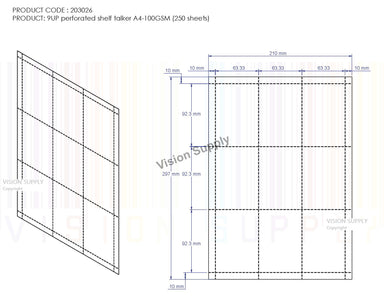
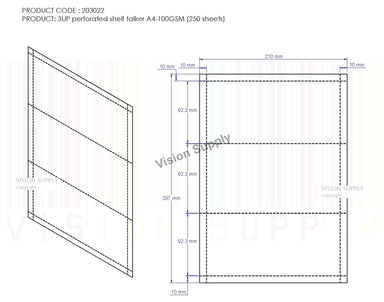
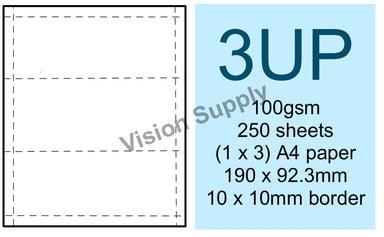
Our A4 perforated ticketing paper is supplied in sheets of 250 with clean perforation lines that allow individual tickets to be separated by hand after printing. Formats include 3UP, 4UP, 6UP and 9UP configurations, where the number indicates how many individual tickets are arranged on each A4 sheet.

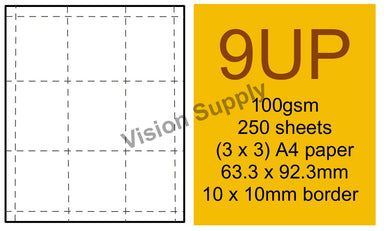
3UP sheets produce three larger tickets per page, ideal for prominent shelf-edge pricing or promotional signage. 4UP and 6UP sheets offer a balance of ticket size and printing efficiency. 9UP sheets are the most popular format for standard shelf-edge pricing, producing nine compact tickets per A4 sheet for maximum yield per print run.

Both standard and premium quality grades are available. Standard ticketing paper is suitable for general pricing applications. Premium ticketing paper offers a smoother finish, brighter white surface and improved ink adhesion for stores wanting a higher-quality presentation.

Shelf Ticket Rolls for Continuous Printing

For stores using dedicated shelf ticketing printers, we supply shelf ticket rolls in continuous perforated format. The popular 80x25mm shelf ticket roll contains 3,500 individual tickets per roll, providing high-volume output with minimal roll changes. These non-adhesive perforated tags are designed to be torn along the perforation and inserted into shelf data strips, ticket frames or PVC ticket pockets along the shelf edge.

Shelf ticket rolls are white and printed on using a thermal printer for crisp, clear text and barcodes. The non-adhesive format means tickets can be swapped in and out of shelf displays quickly during price changes without leaving residue on fixtures.

How Shelf Tickets Work with Shelf Data Strips and Display Fixtures

Shelf tickets are designed to work as part of a complete pricing display system. Once printed and separated, each ticket slides into a shelf data strip, PVC ticket pocket or snap-in ticket frame mounted along the shelf edge. This system allows rapid price changes across the store by simply swapping the ticket inside the display holder, rather than peeling and replacing adhesive labels.

Vision Supply also stocks the shelf data strips, PVC pockets and ticket frames needed to complete your pricing display system. Browse our shop fitting and display collection for compatible shelf-edge fixtures.

Frequently Asked Questions About Shelf Tickets and Ticketing Paper

Q: What is the difference between perforated ticketing paper and shelf ticket rolls?

Perforated ticketing paper comes in A4 sheets designed for laser or inkjet printers. Shelf ticket rolls are continuous rolls designed for dedicated thermal ticketing printers. Both produce individual pricing tickets separated by perforations.

Q: What printer do I need for A4 perforated ticketing paper?

Any standard laser or inkjet printer that accepts A4 paper will work. Simply load the perforated sheets into the paper tray and print using your pricing software or templates.

Q: Are shelf ticket rolls adhesive?

No. Our shelf ticket rolls produce non-adhesive tags designed to be inserted into shelf data strips, ticket frames or PVC pockets.

Q: What does 9UP mean?

9UP means each A4 sheet is perforated into a grid of nine individual tickets (three columns by three rows). After printing, the tickets are separated by tearing along the perforations.