Skip to content

Filters

Cream & Ointment Jars

Cream and Ointment Jars in Glass and Plastic

Vision Supply stocks empty cream and ointment jars in nine sizes and three materials. Pharmacies use them for compounded topicals. Skincare makers use them for balms, salves and moisturisers. Clinics use them for in-house preparations. Soap and candle makers use them for small-batch products sold at markets and online.

Every jar comes with a matching screw lid and is supplied in a pack of 10.

The Full Size Range

Jar

Material

Size

Pack

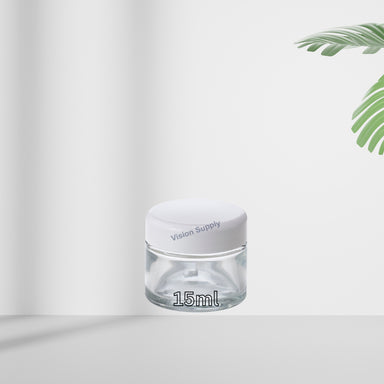
Clear glass cream jar

Glass

15ml

10

Clear glass cream jar

Glass

30ml

10

Clear glass cream jar

Glass

60ml

10

Clear glass cream jar

Glass

120ml

10

Amber glass jar

Glass

30ml

10

Amber glass jar

Glass

60ml

10

Amber glass cream jar

Glass

120ml

10

White plastic cosmetic jar

Plastic

100ml

10

Cosmetic jar

Plastic

500g

10

The 15ml and 30ml sizes suit samples, trial sizes, eye creams and high-value actives. The 60ml and 100ml sizes cover most retail skincare and most compounded topical scripts. The 120ml and 500g sizes suit body butters, bulk balms and salon back-bar use.

Glass or Plastic

Glass feels premium, does not react with oils or essential oils, and can be washed and reused. It is heavier to post and it breaks. Choose glass for retail skincare, for anything with a high essential oil load, and for any preparation where you want the product to look considered.

Plastic is light, cheap to freight and safe in a bathroom or a gym bag. Choose plastic for larger volumes, for travel products, and for anything going to a customer who will drop it.

Amber or Clear

Amber glass filters light. Light degrades vitamin C, retinol, many essential oils and most natural actives. If your formula contains any of those, amber is the safer container, and it buys you a longer realistic shelf life.

Clear glass shows the product. That matters for a coloured balm, a whipped body butter or anything where the texture is part of the sell. It also lets a pharmacist check a compounded preparation without opening it.

If you are unsure, run both. Amber for the active-heavy line, clear for the simple ones.

Filling and Sealing

Fill warm and let the product set before you cap. Capping a hot balm traps steam, and condensation on the underside of the lid will spoil the top surface of your product.

Leave a small headspace. About 3mm below the thread is enough. It gives the lid room to seat without pushing product into the thread.

Clean the rim before you cap. Product on the thread is the single most common reason a jar leaks in transit.

For retail products, add a tamper seal or a shrink band. Customers expect one, and it protects you if a jar arrives opened.

Labelling Your Jars

A curved jar wall needs a label sized to the flat area, not the full circumference. Measure the height of the straight section and keep your label at least 5mm inside it at top and bottom.

Round lid labels work well on smaller jars where the wall is too short for a wrap label. A 15ml or 30ml jar often has more usable space on the lid than the side.

Cosmetic products sold in Australia need an ingredient list in INCI format, a net content statement, a batch identifier and the name and address of the Australian supplier. Compounded pharmacy preparations need dispensing and cautionary labelling instead. Check which set applies to you before you print.

Frequently Asked Questions

Do the jars come with lids?

Yes. Every jar is supplied with a matching screw lid.

How many jars per pack?

10 per pack across the full range.

Are the jars food safe?

Contact us for the specification on any individual jar before using it for food.

Can I reuse the glass jars?

Glass can be washed and reused for personal use. For retail or dispensing, use a new container each time.

Which size is best for a compounded cream?

Most compounded topical scripts in Australia fall between 30g and 100g. The 30ml, 60ml and 100ml sizes cover the majority.

Do you sell these in bulk cartons?

Packs of 10 are the standard unit. Contact us for carton pricing on larger volumes.